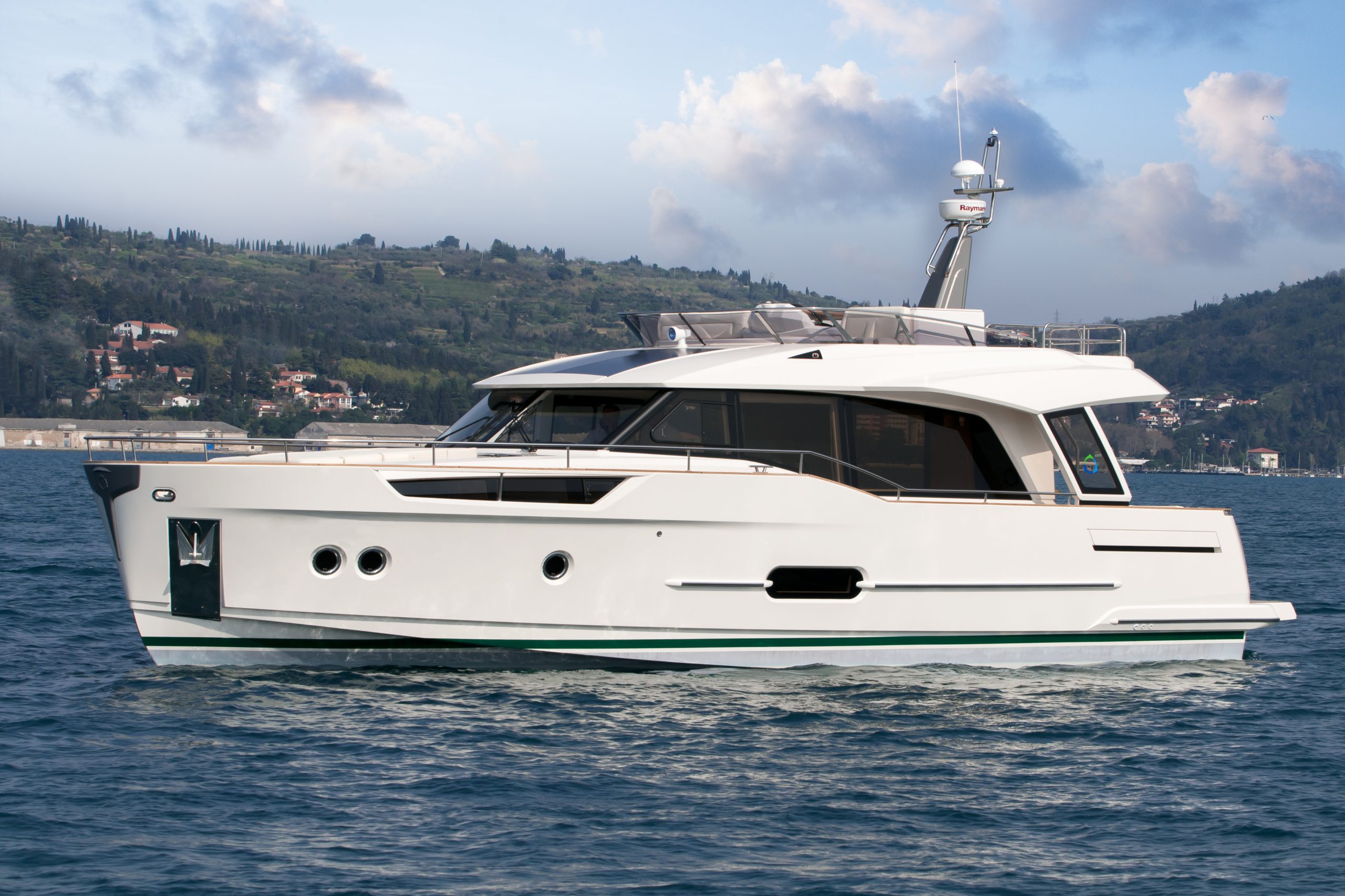
Greenline vs. Traditional Trawlers: Which Smart Cruising Yacht Is Right for You?
For decades, traditional trawlers have earned a loyal following among owners who value comfort, efficiency, and long-range cruising. Their dependable nature, practical layouts, and seaworthy reputation made them the default choice for thoughtful boaters. Today, many experienced owners are asking a different question: Is there a more modern way to cruise?
That question has led a growing number of buyers to Greenline Yachts — a brand that keeps many of the virtues trawler owners love while updating the design, propulsion, and day-to-day living experience in ways that matter. So how does Greenline actually compare to a traditional trawler? Here’s an honest look.
What Traditional Trawlers Still Do Very Well
Traditional trawlers deserve their reputation. For the right owner, they remain excellent vessels. Their core strengths:
- Strong displacement hull efficiency at slow speeds
- Comfortable, stable ride in a variety of conditions
- Long cruising range on manageable fuel loads
- Generous storage capacity designed around extended voyaging
- Solid construction and proven offshore capability
- Timeless styling with a devoted following
For owners planning serious offshore passagemaking or those who genuinely value classic yacht character, trawlers remain highly respected — and for good reason.
Where Traditional Trawlers Can Feel Their Age
The strengths are real — but so are the limitations, particularly on boats designed a generation ago around different ownership expectations.
- Darker interiors — many legacy trawler designs were built with narrow windows and compartmentalized salons that feel closed-off compared to modern open layouts
- Generator dependence — most traditional trawlers run a generator continuously at anchor for hotel loads; a constant source of noise, fuel cost, and maintenance hours
- Narrow side decks and traditional layouts — designed for functionality, not entertaining; less suited to the social cruising style many modern owners want
- Older systems complexity — legacy electrical, plumbing, and mechanical systems that require experienced handling or a professional crew
- Speed ceiling — pure displacement designs sacrifice the ability to reposition quickly when weather changes
For many buyers, these tradeoffs are fine. For others — particularly those transitioning from powerboats or looking for their first extended cruiser — they begin looking for something more current.
Where Greenline Changes the Equation
Greenline Yachts approached cruising from a specific question: how can a yacht remain efficient and practical while feeling brighter, easier, quieter, and more enjoyable to live on every day? The answers are baked into the design rather than bolted on as options:
- Panoramic salon windows — 360° views from the salon, abundant natural light, a connection to the water that traditional trawler designs often sacrifice for structure
- Open social layouts — galley, salon, and cockpit designed as one connected living space rather than separate compartments
- Solar roof + LiFePO₄ battery bank standard — 230/120V always available without running a generator; this is a base spec item on every Greenline, not an upgrade
- One-level deck from cockpit to helm — on the 33 through 48 and 58, no steps between cockpit and helm station; a genuine safety and usability advantage for owner-operators
- Hybrid propulsion options — H-Drive parallel hybrid available across the range, allowing quiet electric operation in harbors, no-wake zones, and anchorages
- Vacuum-infused construction — lighter, stiffer, and more environmentally friendly than conventional lay-up; standard since 2009
- Modern systems designed for owner operation — Greenline builds its boats around the assumption that an experienced couple will operate them without crew
Fuel Efficiency: A More Honest Comparison
Traditional trawlers are often cited for excellent fuel economy at displacement speeds — and that’s true. But the comparison is more nuanced than it first appears.
Greenline’s super-displacement hull is also highly efficient at slow speeds — the Greenline 39, for example, consumes around 4 liters per hour at 6 knots. The H-Drive hybrid adds meaningful electric range for short-range operation in harbors and anchorages. And the standard solar/battery system means energy that a traditional trawler would burn through a generator — for air conditioning, refrigeration, charging — is often handled without burning fuel at all on a Greenline.
The real advantage isn’t just fuel per mile underway. It’s the total energy picture at anchor, where many owners spend the majority of their time.
For more on how the hybrid system actually works, our guide to hybrid yacht propulsion explains it in plain language.
Which Boat Fits Your Lifestyle?
This isn’t a question with a universal answer — it depends on how you actually cruise.
A traditional trawler may be the right choice if you:
- Do significant offshore passagemaking as a primary use case
- Prefer classic trawler styling and character
- Cruise primarily at true displacement speeds with no need to reposition faster
- Want maximum range as your primary metric
- Appreciate traditional yacht systems and are comfortable managing them
Greenline may be the right choice if you:
- Cruise Florida, the Bahamas, the ICW, or the Great Loop
- Spend significant time at anchor and want quiet nights without a generator running
- Value bright, open interiors and modern entertaining layouts
- Want to operate the boat yourself without crew
- Are interested in hybrid technology and smarter energy management
- Care about resale value in a modern, growing market segment
If you’re unsure which profile fits your cruising plans, our hybrid yacht inventory lets you compare available models side by side — or contact us directly for a consultation.
The Real Question Is How You Use Your Boat
Many owners don’t cross oceans. They cruise weekends, coastal routes, island chains, anchorages, and marinas. They spend Friday nights at anchor with family, Saturday on a sandbar, and Sunday running home before dark.
For that lifestyle — which describes the majority of serious recreational cruisers in the Southeast U.S. — the case for a modern platform like Greenline is compelling. Traditional trawlers built the category. They deserve the respect they’ve earned. But the ownership expectations of today’s buyers have changed — and Greenline has built a yacht that meets those expectations honestly.
If you want to understand the ownership cost picture before making a decision, our breakdown of what it really costs to buy and own a yacht covers what owners actually experience year over year.
Compare Greenline Models With an Expert
If you’re weighing a Greenline against a traditional trawler, the best next step isn’t more research — it’s a conversation with someone who knows both. Explore Greenline yachts for sale or contact Yacht Sales International for a private Greenline consultation — we’ll help you match the right model to how you actually cruise.